
Emissions Services in Albuquerque, NM
Failing an emissions test or seeing a related warning light can bring registration renewals and daily driving to a frustrating halt.
Local Automotive Excellence provides thorough emissions services throughout Albuquerque, NM, identifying exactly why a vehicle is underperforming environmentally and correcting the issue so it runs cleaner and passes inspection.
Our emissions services combine precise diagnostics with targeted repair work across every component involved in a vehicle's emissions system.
Suspension & Steering Services
Our drivetrain services keep power moving efficiently from the engine to the wheels, covering transmission diagnostics, transmission repair, and CV axle replacement. Catching drivetrain issues early often prevents far more expensive repairs down the line. This service is especially important for vehicles showing signs of slipping, hesitation, or unusual noises during acceleration.
If your vehicle feels loose, bouncy, or difficult to control, our suspension & steering services are built to fix it. We handle suspension repair, steering repair, and shock & strut replacement to restore stability and comfort. These repairs also play a direct role in braking distance and overall handling safety.
Drivetrain Services
Learn More >
Learn More >
Emissions Diagnostics
Emissions problems rarely have a single obvious cause, which is why emissions diagnostics are the starting point for all of our emissions services. Using specialized scan tools, technicians read stored codes and analyze real-time sensor data to determine exactly which component or system is contributing to excess emissions or a failed test.
Accurate emissions diagnostics prevent unnecessary part replacement and ensure that any subsequent repair actually resolves the issue rather than temporarily masking it. For Albuquerque drivers facing an upcoming emissions test, this diagnostic-first approach saves both time and money.
What Emissions Diagnostics Identify
Faulty oxygen sensors, catalytic converter inefficiency, EVAP system leaks, and fuel mixture irregularities are among the most common findings during an emissions diagnostic scan.
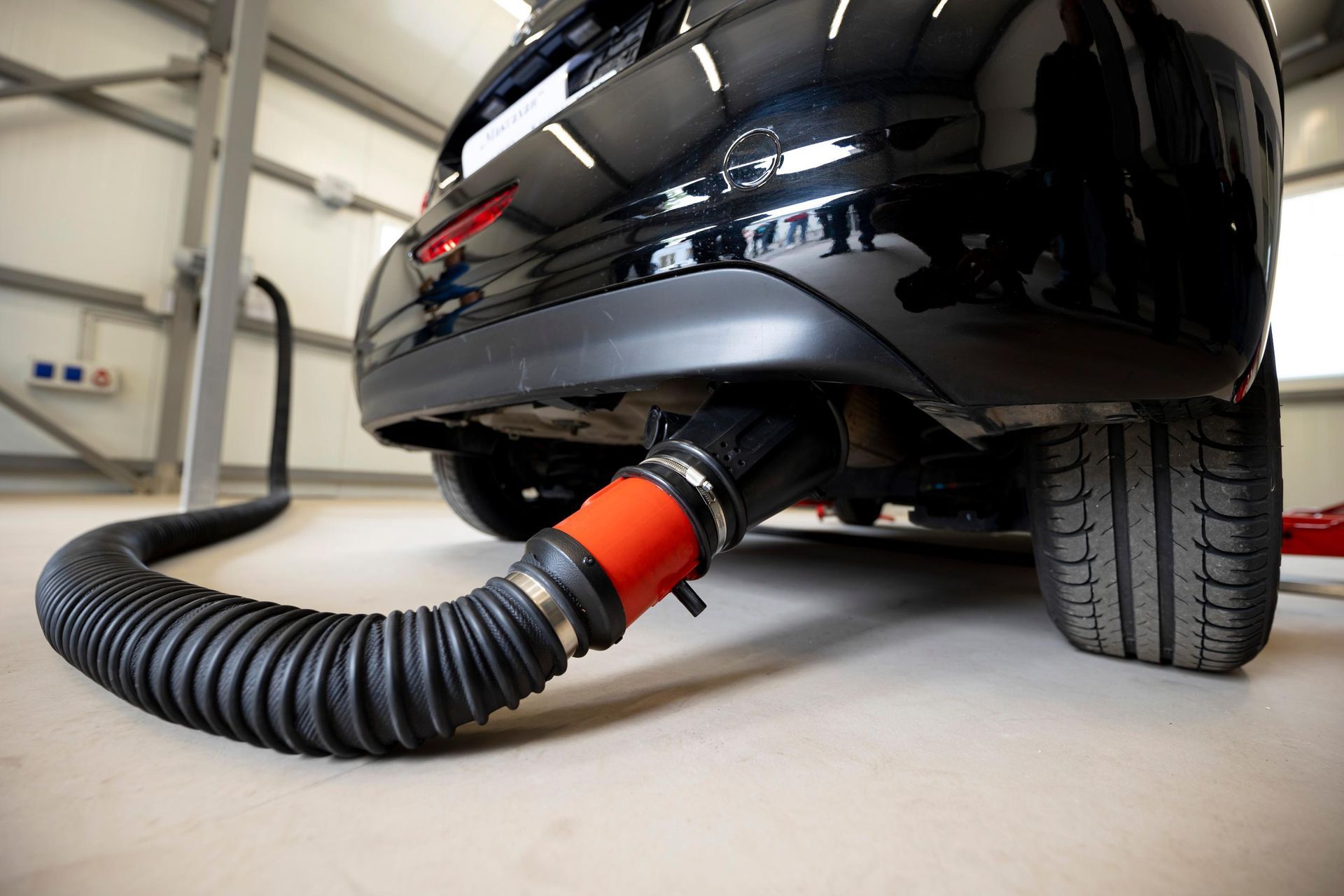
Emissions Repair
Once the cause has been identified, emissions repair addresses the specific component or system responsible for the failure or warning. Emissions repair is one of the most requested emissions services we perform, ranging from sensor replacement to more involved exhaust system work.
Our approach to emissions repair focuses on resolving the underlying mechanical or electrical issue so the vehicle not only passes inspection but continues to run efficiently afterward. Every emissions repair is performed with attention to how the fix affects overall engine performance and fuel efficiency.
Common Emissions Repair Needs
Sensor replacement, exhaust leak repair, vacuum line replacement, and fuel system adjustments are typical repairs completed under our emissions services.
Get an accurate emissions diagnosis before your next inspection.
Catalytic Converter Repair
The catalytic converter plays a central role in reducing harmful emissions before they exit the exhaust system, and a failing converter is one of the most common reasons a vehicle fails an emissions test. Catalytic converter repair, offered as part of our emissions services, involves assessing whether the converter is clogged, damaged, or simply worn out, then determining the appropriate repair or replacement.
Because catalytic converters are closely tied to overall engine performance, addressing converter issues promptly through our emissions services helps prevent secondary problems like reduced power or overheating in the exhaust system.
Signs of Catalytic Converter Trouble
Reduced engine power, a sulfur-like smell from the exhaust, rattling noises, and a failed emissions test are common indicators of catalytic converter issues.
Oxygen Sensor Replacement
Oxygen sensors monitor the balance of fuel and air entering the engine, and a failing sensor can throw off that balance enough to trigger a check engine light and cause an emissions failure. Oxygen sensor replacement is a frequent component of our emissions services, particularly for vehicles with higher mileage where sensors naturally degrade over time.
Replacing a faulty oxygen sensor as part of comprehensive emissions services often resolves both emissions concerns and related fuel efficiency issues, since the sensor directly influences how efficiently the engine burns fuel.
When Oxygen Sensor Replacement Is Needed
A stored oxygen sensor code, declining fuel economy, rough idling, and a failed emissions test are common signs that sensor replacement is necessary.
Schedule oxygen sensor replacement to restore proper engine balance.
EVAP System Repair
The Evaporative Emission Control System, or EVAP system, prevents fuel vapors from escaping into the atmosphere, and even a small leak within this system can trigger a check engine light and cause an emissions test failure. EVAP system repair, included in our emissions services, involves locating the source of a leak — often within the gas cap, fuel tank, or associated hoses and valves — and correcting it.
EVAP-related issues are among the more common reasons vehicles fail emissions testing, and our emissions services are equipped to perform smoke testing and other diagnostic methods to pinpoint leaks that aren't always visible during a standard inspection.
Common EVAP System Issues
A loose or damaged gas cap, cracked vapor hoses, a faulty purge valve, and a failing charcoal canister are frequent causes of EVAP system problems.
Frequently Asked Questions
What are emissions services?
Emissions services include emissions diagnostics, emissions repair, catalytic converter repair, oxygen sensor replacement, and EVAP system repair to help a vehicle run cleaner and pass inspection.
Why did my vehicle fail an emissions test?
Common causes of emissions test failure include a faulty oxygen sensor, a failing catalytic converter, an EVAP system leak, or an improperly functioning fuel mixture.
How do I know if my catalytic converter needs repair?
Signs of catalytic converter trouble include reduced engine power, a sulfur-like exhaust smell, rattling noises underneath the vehicle, and a failed emissions test.
What triggers a check engine light related to emissions?
A check engine light related to emissions is often triggered by a faulty oxygen sensor, an EVAP system leak, or a malfunctioning catalytic converter.
How long does an EVAP system repair take?
EVAP system repair timelines depend on how quickly the leak source is identified, but most repairs, once diagnosed, can be completed within a few hours.
Can a loose gas cap cause an emissions failure?
Yes, a loose or damaged gas cap is one of the most common and easily overlooked causes of an EVAP system leak and subsequent emissions test failure.
How often should oxygen sensors be replaced?
Oxygen sensors typically last between 60,000 and 100,000 miles, though this can vary based on driving conditions and the vehicle's overall maintenance history.
Is it legal to drive with a failed emissions test?
Driving requirements after a failed emissions test vary by state and local regulations, and vehicles are generally expected to be repaired and retested before registration renewal.
What does emissions diagnostics involve?
Emissions diagnostics involves scanning the vehicle's onboard computer for stored codes and analyzing sensor data to determine which component is causing an emissions issue.
Can emissions repair improve fuel efficiency?
Yes, many emissions repairs, such as oxygen sensor replacement or catalytic converter repair, can also improve fuel efficiency by restoring proper engine and exhaust function.
How much does catalytic converter repair typically cost?
Catalytic converter repair costs vary based on the extent of damage and whether the converter needs cleaning, repair, or full replacement, so a diagnostic evaluation is the first step in providing an estimate.