
Safety & Brake Services in Albuquerque, NM
Nothing affects driving confidence quite like a vehicle's braking performance, which makes safety & brake services one of the most important categories of automotive care a driver can invest in.
Local Automotive Excellence provides comprehensive safety & brake services throughout Albuquerque, NM, addressing everything from routine pad wear to full ABS system diagnostics.
Our safety & brake services are designed to catch problems early and restore full stopping performance before a minor issue becomes a dangerous one.
Suspension & Steering Services
Our drivetrain services keep power moving efficiently from the engine to the wheels, covering transmission diagnostics, transmission repair, and CV axle replacement. Catching drivetrain issues early often prevents far more expensive repairs down the line. This service is especially important for vehicles showing signs of slipping, hesitation, or unusual noises during acceleration.
If your vehicle feels loose, bouncy, or difficult to control, our suspension & steering services are built to fix it. We handle suspension repair, steering repair, and shock & strut replacement to restore stability and comfort. These repairs also play a direct role in braking distance and overall handling safety.
Drivetrain Services
Learn More >
Learn More >
Brake Repair
Squeaking, grinding, or a soft brake pedal are all signs that a vehicle's braking system needs attention, and brake repair is often the first step in resolving these symptoms. As a core part of our safety & brake services, brake repair involves a full inspection of the braking system to identify which components are contributing to reduced performance, followed by targeted repairs to restore reliable stopping power.
Because braking issues can stem from several different sources, our safety & brake services prioritize accurate diagnosis before any parts are replaced, ensuring the repair addresses the actual cause rather than just the symptom.
Common Signs Brake Repair Is Needed
Squealing or grinding noises, a vibrating brake pedal, longer stopping distances, and a brake warning light are frequent indicators that brake repair is necessary.
Brake Pad Replacement
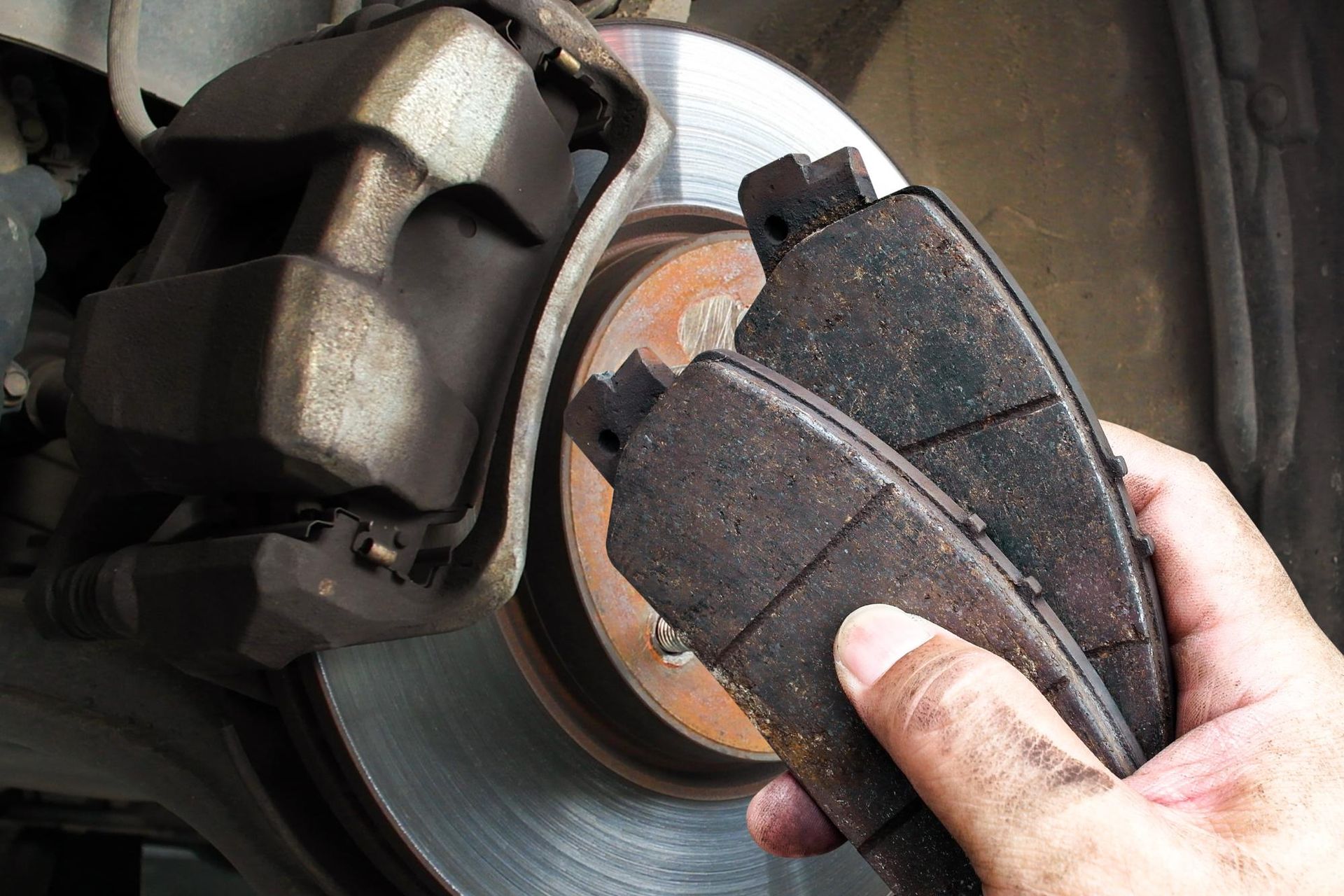
Brake pads wear down gradually with regular driving, and replacing them before they're fully worn is one of the most routine yet essential safety & brake services we perform. Worn brake pads reduce stopping power and, if left too long, can damage the rotors underneath them, turning a simple pad replacement into a more expensive repair.
Brake pad replacement through our safety & brake services uses quality pads matched to your vehicle's make and model, restoring both stopping performance and the quiet, smooth braking feel drivers expect.
Signs Brake Pads Need Replacement
A high-pitched squeal while braking, reduced responsiveness, visible thinning of the pad material, and a grinding sound are common signs that brake pad replacement is due.
Get your brake pads inspected before they wear down further.
Brake Rotor Replacement
Rotors work alongside brake pads to bring a vehicle to a stop, and over time they can become warped, grooved, or too thin to function safely. Brake rotor replacement is an important part of our safety & brake services, particularly for vehicles that have gone extended periods without pad replacement or that experience frequent hard braking.
Warped or damaged rotors often cause a pulsing sensation in the brake pedal or steering wheel, and addressing this through our safety & brake services restores smooth, even braking across all four wheels.
Signs Rotors Need Replacement
Pulsation or vibration while braking, visible grooves or scoring on the rotor surface, a burning smell after braking, and uneven pad wear are common indicators.
ABS System Repair
The Anti-lock Braking System, or ABS, helps prevent wheel lockup during hard braking, particularly in slick or emergency stopping conditions. When the ABS system malfunctions, it can reduce braking control and trigger a dashboard warning light. ABS system repair, offered as part of our safety & brake services, involves diagnosing the sensors, module, and hydraulic components responsible for ABS function.
Because Albuquerque drivers encounter a mix of dry, dusty roads and occasional winter conditions, having a fully functional ABS system is an important safety consideration addressed through our safety & brake services.
Common ABS System Issues
A faulty wheel speed sensor, damaged wiring, a malfunctioning ABS module, and low brake fluid are frequent causes of ABS system warning lights and performance issues.
Have your ABS system diagnosed if the warning light is on.
Safety Inspections
Beyond addressing existing brake concerns, safety inspections provide a broader check of the systems most critical to safe driving. As part of our safety & brake services, a safety inspection examines brake components, tire condition, suspension, lighting, and other elements that directly affect a vehicle's ability to stop and handle safely.
Regular safety inspections through our safety & brake services help Albuquerque drivers catch developing issues early, whether preparing for a road trip, addressing a specific concern, or simply maintaining peace of mind behind the wheel.
What a Safety Inspection Covers
Brake pad and rotor condition, tire tread depth, suspension components, headlight and taillight function, and fluid levels are typically reviewed during a safety inspection.
Frequently Asked Questions
What are safety & brake services?
Safety & brake services include brake repair, brake pad replacement, brake rotor replacement, ABS system repair, and safety inspections to maintain reliable stopping performance and overall vehicle safety.
How often should brake pads be replaced?
Brake pads typically need replacement every 25,000 to 70,000 miles, depending on driving habits, vehicle type, and the quality of the pad material.
What does a grinding noise while braking mean?
A grinding noise usually indicates that the brake pads are fully worn and metal is now contacting the rotor, which requires immediate brake repair to prevent further damage.
How do I know if my brake rotors need replacement?
Signs that rotors need replacement include pulsation in the brake pedal, visible scoring on the rotor surface, and uneven wear between the brake pads.
What causes the ABS warning light to turn on?
The ABS warning light is commonly triggered by a faulty wheel speed sensor, low brake fluid, damaged wiring, or an issue within the ABS module itself.
Is it safe to drive with the ABS light on?
Basic braking typically still functions with the ABS light on, but anti-lock functionality may be disabled, so ABS system repair should be scheduled promptly to maintain full safety features.
How long does brake pad replacement take?
Brake pad replacement is typically completed within one to two hours per axle, depending on the vehicle and the condition of the surrounding components.
What is included in a vehicle safety inspection?
A vehicle safety inspection typically reviews brake components, tire condition, suspension parts, exterior lighting, and fluid levels to confirm the vehicle is safe to drive.
Can worn brake pads damage the rotors?
Yes, if brake pads are not replaced in time, the metal backing can grind against the rotor surface, causing damage that often requires rotor replacement as well.
How often should safety inspections be performed?
Safety inspections are generally recommended at least once a year, or more frequently for vehicles with higher mileage or before long-distance travel.
What's the difference between brake repair and brake pad replacement?
Brake pad replacement addresses only the pads, while brake repair is a broader service that may involve pads, rotors, calipers, brake lines, or other components depending on the diagnosis.